Glaucoma: What You Don’t See Could Harm Your Vision
- What is one of the leading causes of blindness in the U.S.?
- What family of eye diseases is called the “sneak thief of sight”?
- What eye condition damages the optic nerve, leading to permanent vision loss?
If you answered glaucoma for each of these questions, you are correct.
Glaucoma is one of the leading causes of blindness in the U.S. A 2022 study found the disease affects more than four million U.S. adults every year. Of those, about 1.5 million people had vision-affecting glaucoma.
During Healthy Aging Month, we should focus on steps to maintain clear vision as we get older. Learning more about conditions that affect our eyes, like glaucoma, helps us determine the best care to preserve our sight.
Researchers Study Eye Pressure
Glaucoma is a group of conditions that damage the optic nerve, the part of your eye that sends visual information to your brain.
Known as “the sneak thief of sight,” glaucoma can quietly damage your vision without any warning signs. By the time it’s diagnosed, permanent vision loss may have already occurred.
A recent study published in Ophthalmology Science, focuses on how elevated eye pressure changes blood vessels in the eye.
“If we can understand that, we can inform drug delivery to improve blood flow in the back of the eye,” Yi Hua, a University of Mississippi biomedical engineering professor, said in Medical Xpress. “That can slow down the progression of glaucoma.”
Researchers used advanced 3D imaging and glowing dye to track how blood flows through the eye at different pressure levels.
“By combining imaging techniques with 3D modeling, we gained a more comprehensive understanding of blood flow and oxygen distribution in the eye,” said Yuankai Lu, co-author of the study, in Medical Xpress. Lu is a postdoctoral researcher at the University of Pittsburgh.
The study showed extreme eye pressure resulted in a lack of oxygen in approximately 30 percent of the tissue in the optic nerve. According to the study, an oxygen deficit leads to cells dying and eventually loss of sight.
“The vision loss resulting from this damage cannot be recovered,” Ian Sigal, University of Pittsburgh associate professor of ophthalmology and bioengineering, said in Medical Xpress. “Hence, it is crucial to find ways to detect the disease and prevent the damage before it happens.”
Tests to Diagnose Glaucoma
Glaucoma does not have a cure. Vision loss caused by the disease cannot be restored. For most people, early detection through annual comprehensive eye exams and lifelong treatment can maintain vision.
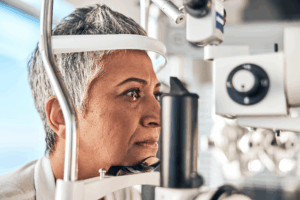
During an exam, your eye doctor may use several tests to check for signs of glaucoma and other eye conditions. These tests measure the pressure inside your eye or intraocular pressure (IOP), your field of vision and the thickness of your cornea, which can affect eye pressure readings and help guide your care.
If glaucoma is found, your treatment plan may include prioritizing regular checkups and taking prescribed medication as directed.
Your eye doctor may also recommend one of several innovative procedures as part of your treatment. For example, Micro-Invasive Glaucoma Surgery (MIGS) targets areas of the eye that other surgeries don’t usually focus on, offering more choices for treatment.
Schedule Your Comprehensive Eye Exam
If you have certain risk factors for glaucoma, ophthalmologists may recommend comprehensive eye exams every six to 12 months for early detection.
You may be at risk for glaucoma if you are age 45 or older, have a family history of glaucoma, are a Black American, have diabetes, are nearsighted (myopic) or farsighted (hyperopic), or have a history of elevated intraocular pressure.
Healthy Aging Month reminds us that keeping our eyes healthy matters at every stage of our lives. During September, focus on eye care for yourself and your family. Schedule an appointment for a comprehensive eye exam today.